DS-BL
What is severity classification in a drought index insurance contract?
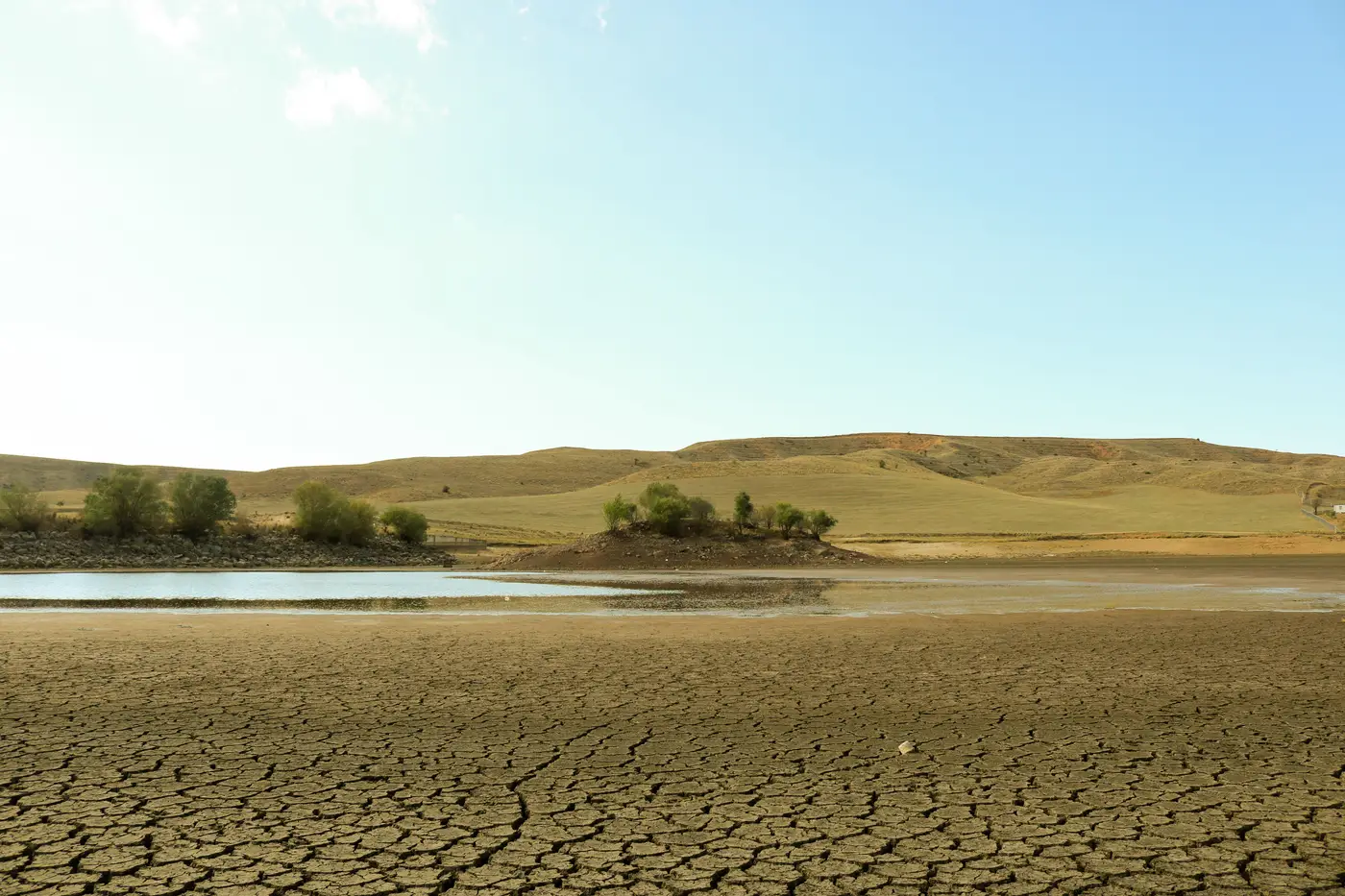
Severity classification is the layer of a drought index contract that turns a raw number into a payout decision. The index itself, usually a vegetation anomaly or rainfall deficit, is continuous. Underwriting isn't. A contract needs discrete bands, mild, moderate, severe, extreme, each tied to a trigger and a payout percentage. Without that layer, there's no payout ladder to write the contract against, just a chart.
How severity bands get set
Most drought index contracts build their severity classification off a historical baseline, a multi-decade average for the region, then measure how far the current reading departs from it in standard deviations or percentile rank. A reading at -0.5 standard deviations might sit in "mild," -1.0 to -1.5 in "moderate," beyond -2.0 in "severe" or "extreme." The exact cut points come from negotiation between the cedant, the index provider, and sometimes a regulator, not from any fixed formula. One book of business sets the moderate band at the 20th percentile; another uses the 15th. Both are defensible as long as the baseline is long enough, and the region is drawn tightly enough, that the percentile means something on the ground.
This is where basis risk gets introduced quietly, often without anyone noticing until a renewal. If the baseline window is too short, or the region is too coarse, a reading that looks "severe" against a ten-year average might be unremarkable against a thirty-five-year one. The severity label on the page is only as good as the baseline underneath it.
What a severity tier actually buys you
A severity classification scheme does a few specific jobs in a drought index contract. It sets the payout ladder, so each tier correlates to a fixed percentage of sum insured and the contract pays out in steps instead of all-or-nothing. It gives the adjuster and the policyholder a shared vocabulary: "moderate" means the same anomaly range every time it's cited, not a judgment call from a field visit. And it gives an analyst a way to backtest a book, pulling every month a region spent in "severe" over the last fifteen years and checking that against loss ratios, without re-deriving the index each time.
None of that holds up if the bands shift between seasons, or if the underlying index gets recomputed on a different baseline each renewal. A contract that calls a region "severe" one year off a twenty-year average and "severe" the next year off a twenty-five-year average isn't comparable across its own renewal cycle, even though the label hasn't changed.
Classification versus a single ground report
A ground report, an agronomist's note, a rain gauge reading, tells you about one point in the region on one day. Severity classification is built to apply across the whole insured area on the same basis every month, which is the only way an index product can be priced and reinsured at scale. The trade-off is real: a classification can miss a localized dry pocket that a ground visit would catch. That's a known limitation of area-based index products generally. Severity bands don't claim to fix it.
Reading the tier on a consistent cadence
For a book to price sensibly, the severity reading has to show up on the same schedule the contract renews or adjusts on, typically monthly, against the same baseline every time, region by region. That consistency, more than the precision of any single month's figure, is what lets an underwriter trust the tier a region has landed in.
Drought Monitoring runs that comparison every month against a multi-decade baseline and returns an anomaly value and a severity classification per region, exported as CSV or a map layer, so the bands in a contract are measured against the same ground every renewal.
If you're setting cut points for next year's treaty, it's worth checking what a region's severity tier looks like against an actual baseline before the ladder gets locked in.