DS-BL
What is basis risk in parametric drought insurance?
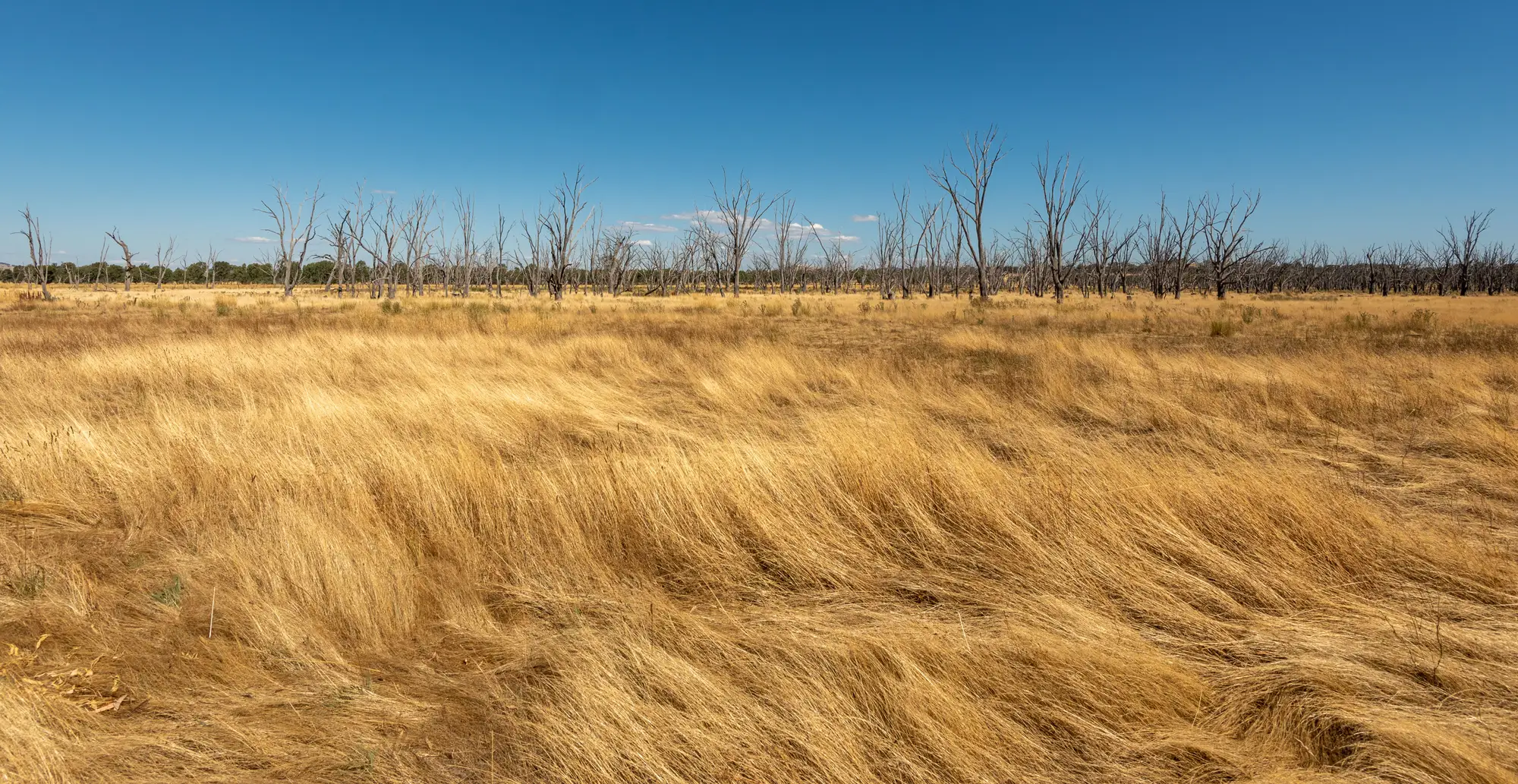
Basis risk is the gap between what the index pays and what the insured lost. In a parametric drought policy, the trigger fires on a number (a rainfall deficit, a vegetation index anomaly, a soil moisture reading) rather than on an adjuster walking a field. When that number and the real loss on the ground disagree, somebody eats the difference. A grower collects nothing in a year their yield was gutted. A cedant pays out on a region where half the farms had a fine season. Either way, the basis risk shows up on the loss ratio before anyone asks why.
It's the trade-off every index product makes to skip the claims adjustment cycle. You give up exact loss measurement for speed and low cost. Basis risk always exists in an index product; what matters is how big the gap runs and whether your pricing already accounts for it.
Where basis risk comes from in a drought index
Three things drive it, and they're all decisions someone made when the index was designed.
Spatial resolution. A trigger built on a weather station average or a coarse satellite grid cell smooths over the exact farm that filed a claim. A 25 km rainfall grid can show normal totals for a region while one watershed inside it goes dry. That mismatch between the index footprint and the exposure on the ground is the most common source of basis risk analysts flag in post-event reviews.
Index choice. Rainfall totals are the oldest proxy and the weakest one. A dry month followed by a wet one can average out to a "normal" season on paper while the crop never recovers from the gap. Vegetation condition is a better proxy for what the plant experienced in the field, because it reflects accumulated moisture stress rather than a single month's precipitation ledger.
Baseline quality. An anomaly is only as good as what it's measured against. A five- or ten-year baseline gets distorted by whatever drought or wet cycle happened to fall inside that window. A short baseline inflates or deflates the anomaly in ways that have nothing to do with the current season, which pushes the trigger threshold off from where it should sit.
None of this is a flaw in the parametric model itself. It's a function of how tight the inputs are. Tighten them and the gap narrows. Leave them loose and basis risk eats into the loss ratio every renewal.
Narrowing the gap between index and loss
Resolution and baseline length close most of that gap. A region-by-region vegetation index anomaly run against a multi-decade baseline gives a tighter read than a province-wide rainfall average checked against the last five seasons. The finer the grid, the closer the index tracks what's happening on the insured area instead of a regional smear. The longer the baseline, the less a single anomalous decade skews the comparison.
This is the gap Drought Monitoring was built to close. It computes vegetation index anomalies monthly, region by region, against a multi-decade baseline, and hands back an anomaly value and severity classification per region as CSV or a map layer. That's the kind of input an actuarial team can run against historical trigger points to see where basis risk sat in past seasons, before setting next year's attachment and exhaustion points.
Basis risk never goes to zero in a parametric structure. That's the deal you signed up for when you chose speed over adjustment. But a trigger priced against a loose index and a short baseline carries more of it than it needs to, and that extra exposure is one you can measure and shrink rather than just accept.
If your current trigger is still priced off rainfall totals from a handful of stations, it's worth checking what that index is really approximating against the loss history behind your book.
Ready to see how a tighter index would have scored your last few renewal seasons? Take a look at the monthly anomaly output before you lock in next year's trigger.