DS-BL
Choosing a baseline period length for a vegetation index drought trigger
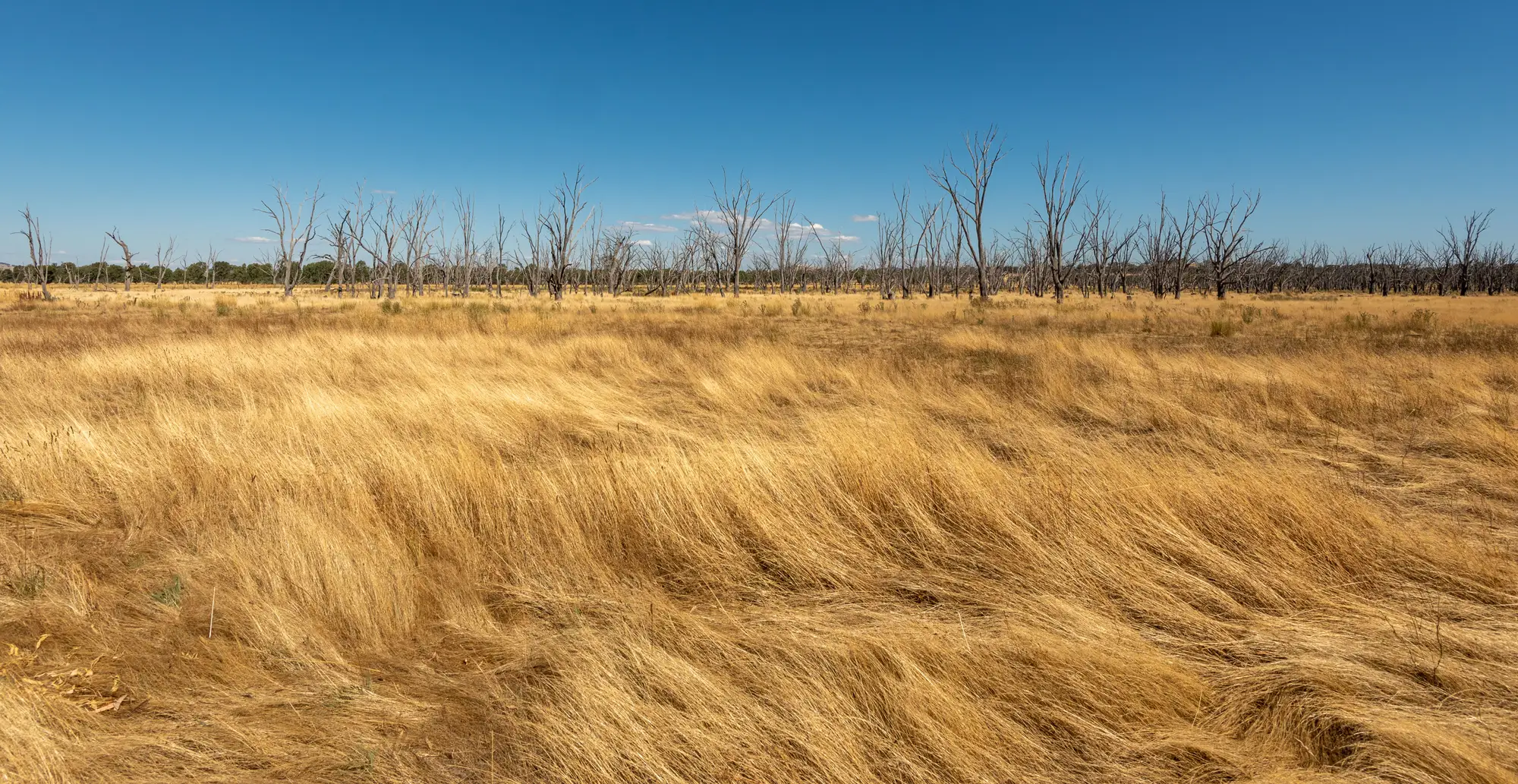
Pick a 10-year baseline for your vegetation index trigger and a bad year or two can swing the mean enough to flip a region from "normal" to "moderate" on the severity scale, and your loss ratio moves with it. Pick a baseline that's too long and stretched across sensors that were never cross-calibrated, and you're comparing apples to a fruit salad. The baseline window is a parameter that sets where the trigger fires, and it deserves the same scrutiny as the trigger threshold itself.
Why the window length moves the trigger, not just the write-up
A vegetation index anomaly is a departure from a mean, usually expressed in standard deviations. Both of those numbers, the mean and the spread, come from whatever years you put in the baseline. Shrink the window to ten or twelve years and a single severe drought inside that window pulls the mean down, which quietly raises the bar for what counts as "severe" going forward. Stretch the window across decades of mixed sensors with different radiometric calibration, orbit drift, or resolution, and you're smoothing real signal into noise, or worse, baking in a false trend that's actually a hardware artifact.
Reinsurers and cedants both know this, which is why basis risk conversations keep circling back to one question: show me the baseline, not just the trigger.
The 30-year convention, and why satellite records rarely hand you one cleanly
Climatologists lean on the WMO's 30-year normal for a reason. Thirty years is long enough to average out most of the decadal noise (ENSO cycles, multi-year wet or dry runs) without averaging out an actual shift in climate. Vegetation index archives built from AVHRR start in the early 1980s, MODIS picks up in 2000, and newer wide-swath multispectral platforms add more recent, higher-resolution records on top. None of that lines up into one tidy, continuously-calibrated 30-year block for every region on the planet.
In practice, you're choosing between a shorter window built entirely on one consistent sensor and a longer window stitched across sensors with a cross-calibration step in between. Both are defensible. Neither should be undisclosed.
Matching the window to the risk you're actually pricing
This is where the choice stops being a statistics problem and becomes an underwriting one.
If the region has a documented drying trend, a baseline pulled from the full historical record will understate current risk, because it's averaging in wetter decades that no longer describe the climate the policyholder is farming in. Some analysts detrend the baseline before computing the anomaly; others shorten the window to the most recent 15-20 years on purpose, accepting a smaller sample to stay current. Either is a legitimate underwriting decision. Recomputing the baseline window every renewal cycle without telling anyone is a different problem: a sliding baseline moves the trigger threshold year to year even when the policy wording hasn't changed, and that manufactures basis risk nobody priced into the contract.
A few things worth fixing before you lock the trigger wording:
- Use the longest continuous record from a single sensor family for that region before reaching for a cross-sensor blend.
- Fix the baseline for the life of the contract term. Recompute it at renewal if the facultative terms call for it, but don't let it drift silently inside an annual policy.
- Fifteen years is a working minimum for a monthly vegetation index baseline; twenty to thirty gives you a sample that holds up under a reinsurer's scrutiny.
- Document exactly which months, which years, and which sensor generations went into the mean. A trigger definition without a baseline definition attached to it is half a contract.
None of this is academic once you're staring at a renewal date. The monthly anomaly and severity classification behind a trigger like this is only as good as the baseline it's computed against, region by region, refreshed on a fixed cadence rather than redrawn whenever it's convenient.
If you're setting trigger terms for the next book of business, it's worth seeing how that baseline gets built and held steady before you write the wording.